








Most people discover Thai law on Koh Phangan the hard way: a deposit that never comes back, a "90-year" lease that turns out to be 30, a visa run refused at the border. These guides exist so you learn it before it costs you.
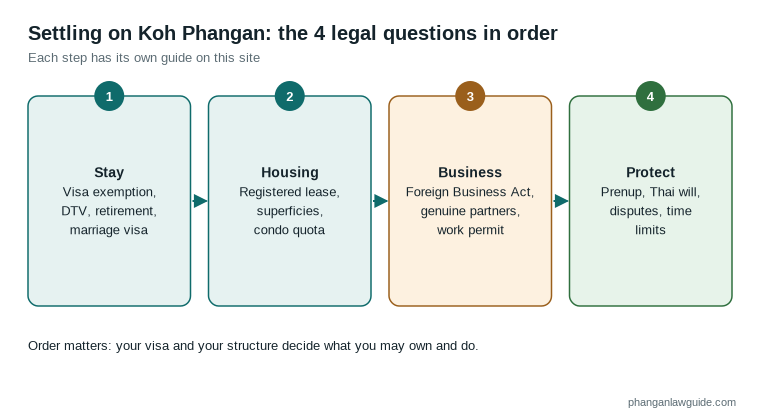
Why a guide dedicated to Koh Phangan?
Thai law is national, but the way it plays out on Koh Phangan is local: most foreign buyers deal with land rather than condos, many titles are older Nor Sor 3 documents, building rules are shaped by the island's environmental protection status, and immigration, land and district offices each have their own habits. General "Thailand" articles rarely cover that.
How do these guides work?
- Answer first. Each guide opens with a short, direct answer, then the detail.
- Sources. We point to the Thai law or official body behind each rule, so you can check it.
- Kept current. Every page shows its last review date. Thai rules change, especially on visas.
- Independent. We are not an estate agent and do not sell property.
What do readers ask most?
- Koh Phangan nominee crackdown: what is happening?
- Is a 30+30+30 lease still valid?
- Visa-free stay cut to 30 days: how to extend on Koh Phangan
- Can a foreigner own land on Koh Phangan?
- What is the difference between a Chanote and a Nor Sor 3?
- DTV visa: what changed on 31 August 2026?
- Is my Thai company at risk if it uses nominee shareholders?
- Do I need a licence to rent out my villa to tourists?
- Retirement visa: how long must the 800,000 THB stay in the bank?
- Can a foreigner own a condo on Koh Phangan?
- Who inherits from a foreigner who dies in Thailand without a will?
- Scooter accident: what to do, who pays?
- Tax: are you a Thai tax resident?
- Working on the island: do you need a work permit?
- TM30 and the 90-day report: who reports what?
- Simulators: visa, buying costs, tax, retirement, 90 days
- Glossary: Chanote, usufruct, Tabien Baan… 13 terms explained
- What changed on Koh Phangan this month
- Marrying a Thai national: visa, property, land
General information only, not legal advice. Thai rules change: check your own situation with a licensed Thai lawyer before acting.