Superficies and usufruct in Thailand: how a foreigner can own their house on Koh Phangan
On this page6
Mark had his villa built in Haad Salad on land leased for 30 years. The lease is properly registered. But when he wants to sell the house, the buyer finds that no document says it belongs to him: without a right of superficies and without a building permit in his name, the house follows the land, and the land belongs to his lessor.
It is the most common mistake on the island: confusing the right to use a plot with ownership of the house standing on it.
What is a right of superficies?
A superficies is a real right that lets you own buildings on someone else's land: a house, a pool, a structure. It is set out in sections 1410 to 1416 of the Thai Civil and Commercial Code.
- Term: a number of years, 30 at most, or the landowner's lifetime, or the holder's lifetime.
- Transfer: unless the contract says otherwise, it can be sold and inherited.
- Protection: once registered at the land office, it binds any new owner of the land.
For a foreigner, it is the tool that legally separates the house from the land. Without it, the general rule applies: what is built on land belongs to the landowner.
And usufruct, habitation, leases?
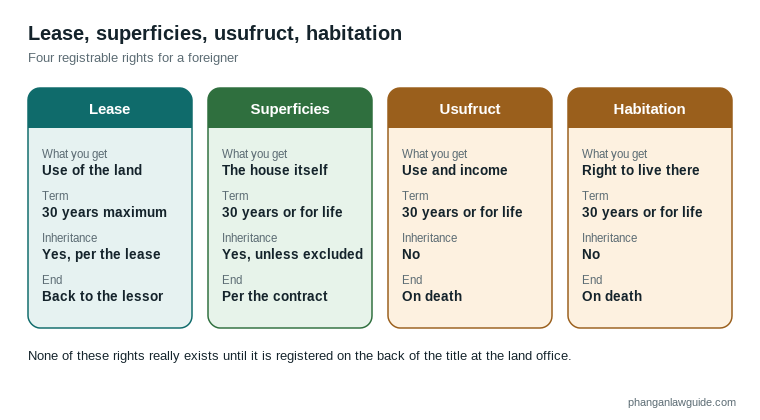
- A lease: the right to use the land, 30 years at most (section 540). Renewals promised in advance are mere contractual commitments, fragile since ruling 4655/2566.
- A usufruct: the right to use a property and earn from it (renting the house out, for example), for 30 years or for life. It ends on death and cannot be passed to your heirs.
- Habitation: the right to live in a house, for 30 years or for life. Useful, for example, to protect a foreign spouse.
Each of these rights only really exists once registered on the back of the title at the land office. And the title must allow it: a Chanote or a Nor Sor 3 Gor.
How do you own your house on leased land?
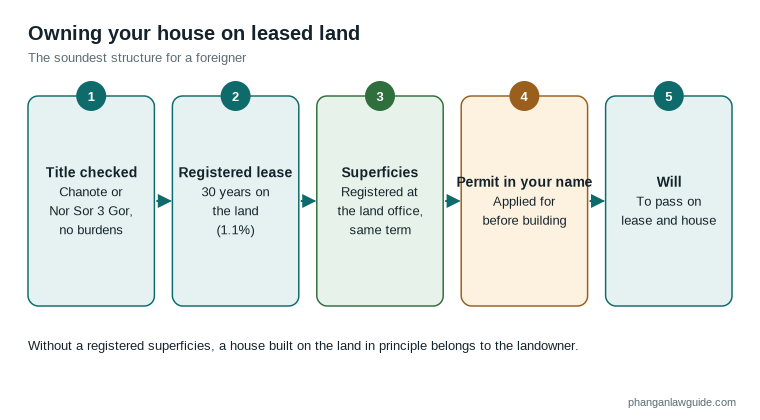
The soundest structure for a foreigner combines several rights, each one registered:
- A checked title: Chanote or Nor Sor 3 Gor, with no mortgage or attachment on the back.
- A registered 30-year lease on the land (1.1% of the rent).
- A superficies registered for the same term, making you owner of the buildings.
- The building permit in your name, applied for before the works, proving you built it.
- A will, to pass on the lease and the house without deadlock.
For a house that already exists, the land office may require the building to be transferred to you first, with its fees and taxes, before it accepts the superficies.
Can the land office refuse?
Yes. The land office keeps discretion, and some officers refuse a usufruct or a superficies if they see it as a way to get around the ban on foreigners owning land. That is typically the case when a foreigner pays for land put in the name of a Thai third party.
An honest structure (a real lessor, a real rent, a house you built or bought) is generally accepted. A structure used to hide foreign ownership of land has, since 2025, exposed people to nominee prosecutions.
Frequently asked questions
Can a foreigner own a house in Thailand?
Yes, the house itself, but not the land. A right of superficies, registered at the land office, makes you owner of the buildings on someone else's land.
How long does a right of superficies last?
30 years at most, or the landowner's lifetime, or the holder's lifetime.
Can a superficies be inherited?
Yes, unless the contract excludes it. A usufruct cannot: it ends on death.
What is the difference between a usufruct and a lease?
A lease gives use of a property for rent, 30 years at most. A usufruct gives use and income, for 30 years or for life, but cannot be passed on.
Do you need a superficies if you already have a lease?
Yes, if you want to own the house. The lease only covers use of the land.
Can the land office refuse a superficies?
Yes, if it considers the structure is meant to get around the ban on foreigners owning land.
Sources
- Chambers, Real Estate 2026: superficies, habitation and servitude
- Chambers, Real Estate 2026: usufruct for up to 30 years
- ThaiLawOnline: superficies, term, transfer and registration
- Global Law Experts: usufruct (sections 1417 to 1428) and superficies (1410 to 1416)
- Luther: land office discretion over usufructs
- Legal 500: lease or usufruct for a foreigner
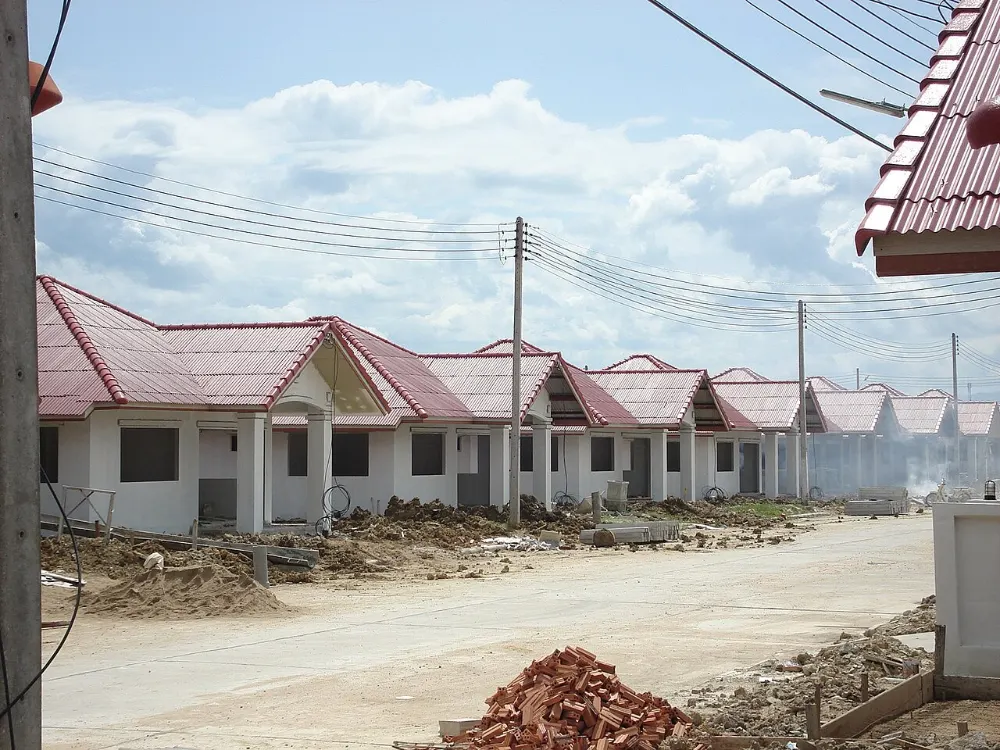
- Photo: houses under construction, Love Krittaya, public domain, Wikimedia Commons.
Share
Related guides
 Property30+30+30 leases after 4655/2566Is a 30+30+30 lease still valid? What Supreme Court ruling 4655/2566 means for Koh Phangan villas, options for…
 PropertyChanote vs Nor Sor 3 Gor: which land title?Chanote, Nor Sor 3 Gor, Nor Sor 3, Sor Kor 1, Por Bor Tor 5: what each Thai land document is worth on Koh Phangan,…
 PropertyBuying costs and taxes: who pays what?A 2% transfer fee, 3.3% business tax or 0.5% stamp duty, 1.1% to register a lease, yearly land tax: the real cost of…
 PropertyBuilding your villa: permits and zonesA building permit (Or. 1) in your name, altitude zones, 35% slopes, a 6 m height cap: what a foreigner must know…